
Reactive Resourcing is Holding You Back. Here’s How to Take Control.
Get Full Report
Introduction
Across professional services organizations, resource planning often feels like forecasting the weather without radar. Managers rely on outdated spreadsheets, partial data, or siloed systems that only show part of the picture. The result? Constant reaction.
When projects are approved without clear timelines or sales pipelines don’t align with delivery schedules, staffing decisions become guesswork.
Reactive resourcing creates a cycle of project delays and misaligned workloads.Leadership is left trying to make sense of inconsistent utilization numbers that rarely match financial goals.Teams burn out from being overutilized one month and underused the next, while contractors are brought in at premium rates to fill urgent gaps — even when the right people are already on the payroll.
This cycle can feel impossible to break. But it isn’t.
What is reactive resourcing?
Reactive resourcing happens when staffing decisions are made in response to immediate needs rather than strategic planning. It’s fueled by incomplete data, siloed systems, and weak alignment between sales, delivery, and finance.
Key signs of reactive resourcing include:
- Emergency hiring or frequent use of contractors to fill immediate gaps
- Over- or under-utilization of staff from month to month
- Misaligned skills on projects due to lack of visibility
- Continuous firefighting and shifting priorities that frustrate teams and risk client satisfaction
While it may feel routine, reactive resourcing quietly drives inefficiency, higher costs, and burnout — threatening your organization’s health.

How big is the problem?
The data tells a clear story: reactive resourcing is a widespread challenge that’s holding firms back.
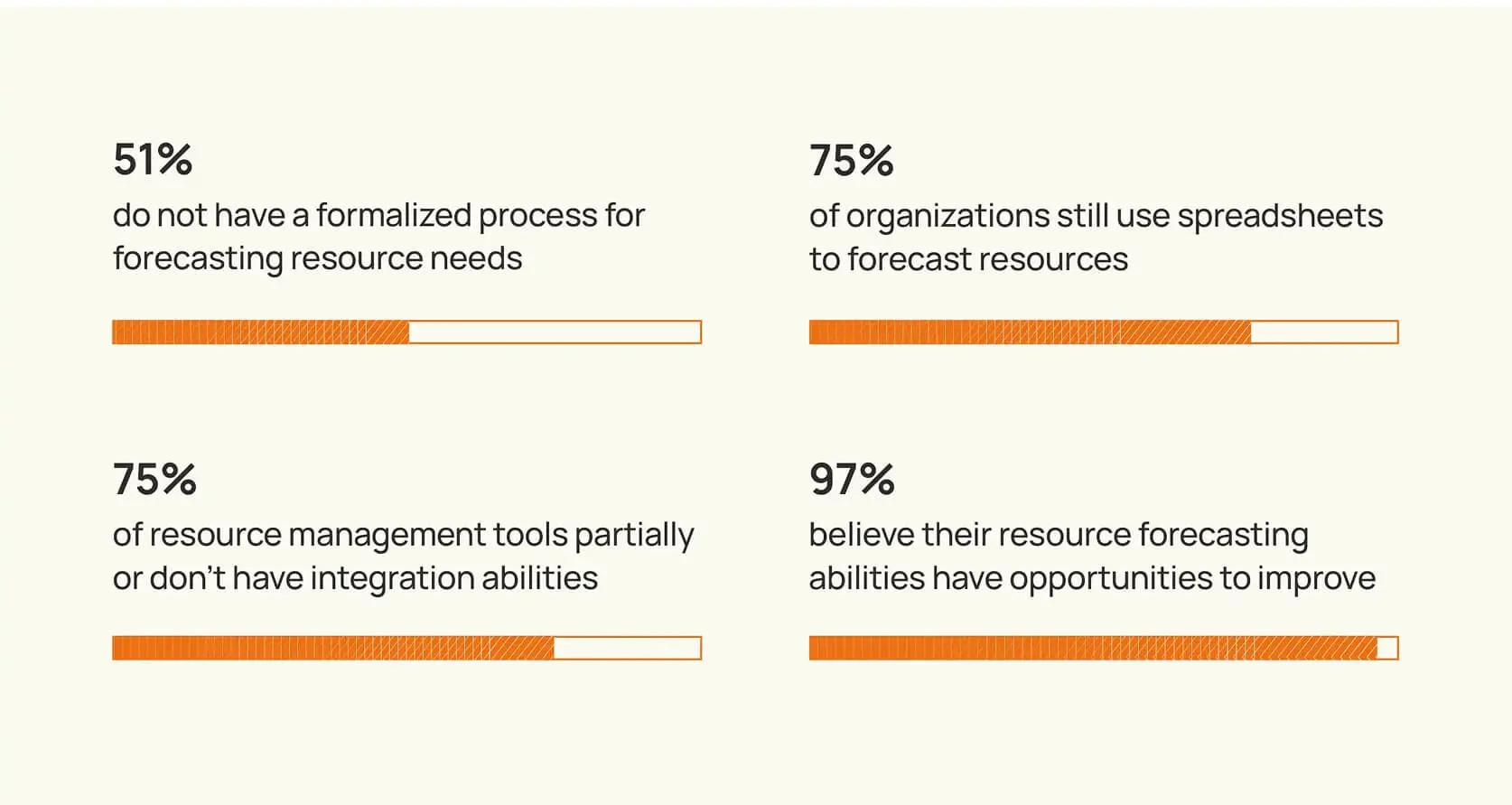
According to a Forrester Consulting study commissioned by Kantata and Salesforce, 56.9% of professional services organizations struggle to forecast the roles and skills they’ll need for upcoming projects. Meanwhile, 58.5% cite visibility gaps that make optimizing capacity nearly impossible.
Kantata’s 2025 State of the Professional Services Industry report uncovered even more telling numbers: 71% of firms turned down work last year because they couldn’t determine whether they had the right people available.
Without the right tools to connect your data and teams, opportunities slip away.
The impact is clear:
- Revenue Loss: Projects remain unstaffed or delayed while teams scramble
- Inefficient Utilization: The wrong people end up on the wrong projects
- Employee Frustration: High performers feel stretched thin; others feel underused
- Client Dissatisfaction: Inconsistent delivery erodes confidence, even when the work itself is strong
Each of these challenges stem from the same root issue: reactive resourcing that limits your ability to plan ahead.
The True Cost of Reactive Resourcing
The financial toll of reactive resourcing is significant.
Let’s put the cost of reactive resourcing into perspective. Consider a 250-person firm with a $200 blended rate. When you account for missed billable hours, inefficiencies from mismatched staffing, and lost deals due to unclear capacity, the financial impact can reach into the millions every year.
And that’s just the measurable part. The hidden costs are even more damaging: overreliance on contractors for roles that could have been filled internally, projects turned down due to poor visibility, and the erosion of both client and employee satisfaction.
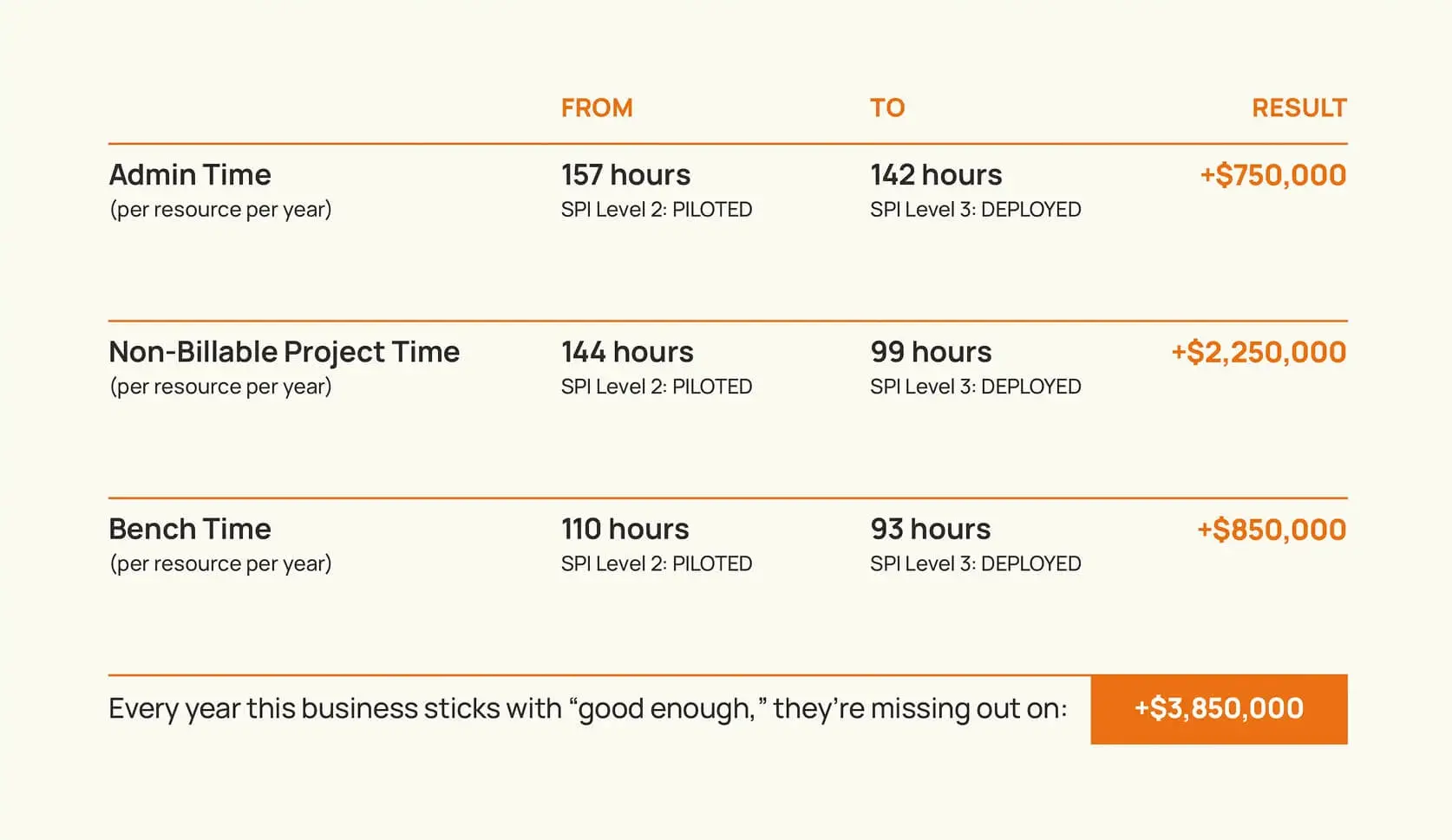
The hidden costs run even deeper:
- Scattered Knowledge: Relying on outside talent makes it harder to retain institutional knowledge.
- Team Burnout: Constant context-switching and emergency staffing drive disengagement and turnover
- Reputation Risk: Clients notice shifting delivery teams and delayed start dates
Reactive resourcing might be the status quo, but it’s far from sustainable.
Taking Action:
How to Turn Resourcing Into a Strategic Advantage
Reactive resourcing thrives in uncertainty. But with the right systems, processes, and mindset, you can shift from constant scrambling to proactive precision.
Here are three ways to get ahead of the chaos:
1
Standardize Project Scoping and Intake
Last-minute project scoping leads to last-minute staffing. A standardized intake process — complete with clear timelines, required skills, and approvals — gives resource managers the lead time they need to allocate talent strategically rather than reactively.
Proactive intake turns staffing from a bottleneck into a competitive advantage. Resource managers gain time to match the right people to the right work before kickoff.
2
Build Your Skills Inventory
Knowledge is power, but only if it’s accessible. A real-time skills inventory provides a searchable view of your team’s capabilities, certifications, and availability.
This single source of truth helps managers:
- Identify who’s ready for new work
- Spot development opportunities
- Determine where external hiring is truly necessary
With real-time insight into your team’s capabilities and capacity, you can fill roles faster, retain top talent, and reduce reliance on outside contractors.
3
Forecast Demand With Real-Time Data
The key to proactive resourcing is anticipation.
Historical project data, combined with real-time pipeline visibility, helps organizations see what’s coming and staff accordingly.
The longer the forecast visibility is, the more options that you have at your disposal to solve that particular problem, whether it be in-house, resources, external resources, or so on.
By integrating sales and delivery systems, you can connect the dots between what’s sold and what’s staffed. Resource managers gain forward-looking visibility, while finance teams can project revenue and utilization more accurately.
With these insights, resourcing becomes a strategic driver of growth and not just an operational function.
Stop reacting. Start leading.
Proactive resource management isn’t about working harder — it’s about working smarter, with full visibility and confidence in every staffing decision.
Firms that adopt proactive resourcing gain control. They can:
- Align staffing decisions with business goals
- Increase profitability through higher utilization
- Deliver better client outcomes with happier teams
Kantata empowers organizations to make this shift. With connected insights across sales, delivery, and resourcing, firms can confidently forecast demand, optimize capacity, and deploy people where they’ll make the greatest impact.
Get Full Report